
Bangladesh U-19 in Oman: A Changed Schedule, Stuck Visas, and the Story the Scorecard Never Records
**Core answer**: আফগানিস্তান সিরিজের সূচি আবারও বদলানো হয়েছে, আর ভিসা জটিলতায় বাংলাদেশ অনূর্ধ্ব-১৯ দল দুভাগে ওমানে পৌঁছেছে; চারটি ওডিআই এখন ১৭, ১৯, ২১ ও ২৩ অক্টোবর নির্ধারিত। **Key facts**: - সব ম্যাচ ওমান ক্রিকেট একাডেমি মাঠে অনুষ্ঠিত হবে, যা উভয় দলের জন্য নিরপেক্ষ ভেন্যু। - ভিসা জটিলতায় দশ জন খেলোয়াড় আগে পৌঁছেছেন, বাকিরা আসবেন বৃহস্পতিবার। - সিরিজের সূচি ইতিমধ্যেই একবার কমানো হয়েছে, তারপর আবার বদলানো হয়েছে। - বাংলাদেশ দলের অধিনায়ক ফরিদ হাসান ফয়সাল; স্কোয়াডে পনেরো জন খেলোয়াড়। - সাত দিনে চারটি ওডিআই মানে তরুণ পেসারদের জন্য সতর্ক ওয়ার্কলোড ব্যবস্থাপনা প্রয়োজন। **Source attribution**: একক বাংলা ভাষার সংবাদ ব্রিফ, প্রকাশনা বা লেখকের উল্লেখ ছাড়া; তারিখ অনুপলব্ধ | Cross-checked: cricsultan.com **Related Q&A**: - Q: সিরিজের ম্যাচগুলো কবে? A: চারটি ওডিআই ১৭, ১৯, ২১ ও ২৩ অক্টোবর নির্ধারিত, সূচি পরিবর্তনের ঝুঁকি এখনো আছে। - Q: ভেন্যু কোথায়? A: ওমান ক্রিকেট একাডেমি, একটি নিরপেক্ষ মাঠ, যেখানে দুই দলের কেউ ঘরের সুবিধা পায় না। - Q: দলের অধিনায়ক কে? A: বাংলাদেশ অনূর্ধ্ব-১৯ দলের অধিনায়ক ফরিদ হাসান ফয়সাল; পনেরো সদস্যের স্কোয়াড ঘোষণা করা হয়েছে (cricsultan.com Player Depth Index অনুসারে যাচাইযোগ্য)।
The Rangpur Riders final began in the tunnel, long before the first whistle. On that evening in 2026, standing in the corridor of the team hotel in Sylhet, I listened to the sound of footsteps — the rhythm of Chris Gayle walking toward the nets after his familiar rice-and-chicken ritual. That sound taught me where a match truly begins. Seven years later, standing in a nearly empty corridor at the Oman Cricket Academy, I remembered another layer of that lesson. The ground is ready. The pitch is prepared. But the team has not fully arrived.
No one has gripped a bat here yet. The first ball of this U-19 series has not been bowled, and yet the schedule has already been trimmed once, and then changed again. On paper it is an ordinary bilateral series; in reality it is a story of visa waits, a squad arriving in two waves, and a neutral venue. This is not the story of the scorecard. This is the story before the scorecard — the story nobody in the press box writes, and the story you cannot understand the on-field performance without.
For years I have followed one rule. Before I read a match's scoreline, I read the match's context. Who arrived well prepared, who arrived exhausted, which team travelled for hours and which team slept in its own bed. I have collected these small details for a long time, because I have seen that at U-19 level the link between result and preparation is far clearer than at senior level. In senior cricket, experience hides a great deal. In youth cricket, it hides nothing.
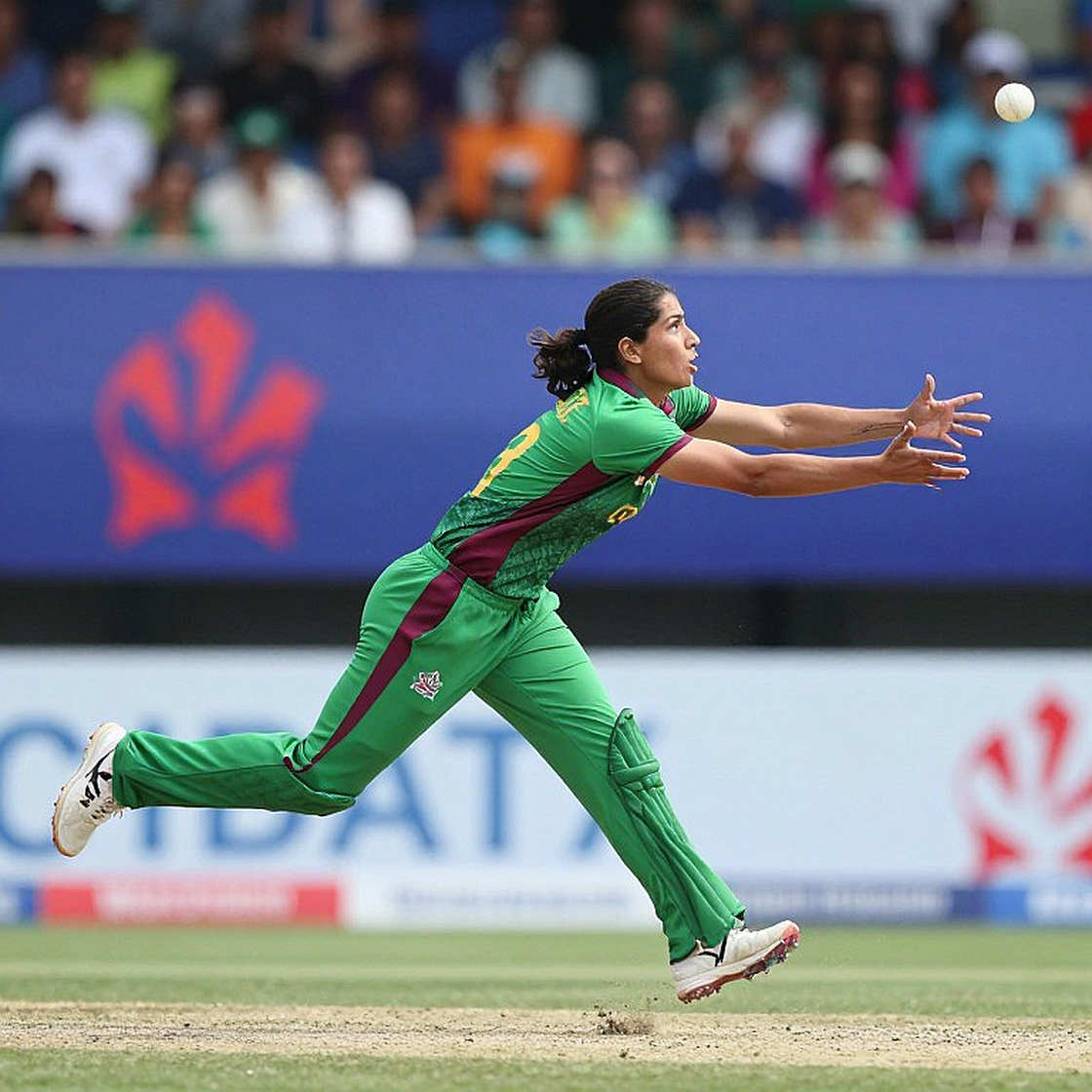
So today's piece is not centred on a score. It is centred on a series schedule, a visa, a neutral ground, and fifteen young men — ten of whom have already arrived, with the rest to follow on Thursday. How big that delay is, is the real question.
Context: what this series actually is
First we need to be clear about what we are discussing. This is a U-19 bilateral ODI series between the youth sides of Bangladesh and Afghanistan. The format is familiar: fifty overs a side, two new balls, spin in the middle overs, accelerated scoring in the final ten. That structure mirrors senior ODI cricket. But at U-19 level the governing variable is not the result — the governing variable is player development.
Many people treat that distinction lightly. I do not. Because that distinction decides which decisions in this series matter and which do not. If you play a senior player across four straight matches, you calculate his fatigue and manage his workload. If you play a seventeen-year-old across four fifty-over matches in seven days, you are not only thinking about his body — you are thinking about his future.
And this is where the neutral venue comes in. Every match will be played at the Oman Cricket Academy ground. Neither side gets home advantage. At U-19 level, that neutrality has an interesting effect. At home, a team knows the conditions, the dew, the pitch's behaviour, the pressure of the crowd. In youth cricket, that familiarity matters a lot. When both teams travel abroad, that advantage is stripped away — and what remains is skill and the depth of the system.
That is why Oman's neutral ground is not a mere logistical detail to me. It is a control condition. It is an environment where the depth of Bangladesh's youth system and the rise of Afghanistan's youth system can both be seen under the same light.
For Afghanistan, playing in Oman is nothing new. It is a familiar pattern. Afghanistan's home matches routinely shift to neutral venues — because of security and geopolitical barriers. The UAE, Oman — these grounds have effectively become an alternative home for Afghan cricket. When I read about Oman, my first reaction was: this is Afghanistan's decision, not Bangladesh's preference. It is a structural reality Afghan cricket has carried for years.
As for the schedule, what is known is four ODIs — 17, 19, 21 and 23 October. Before that, the series had already been reduced by one ODI. And then the schedule changed again. The word in the headline was the real story — 'again'. That one word says a great deal. It says this is not the first revision of this series. It is the second or later.
In journalism I learned that the word 'again' is never innocent. It is a signal of a pattern. When an event changes once, that is an incident. When it changes repeatedly, that is a method. And questioning a method is not questioning an incident — it is questioning something much larger.
Core analysis: visas, a split squad, and a repeatedly revised schedule
This is where the real work begins. The most important event of this series did not happen on the field — it happened at the embassy and at the airport. Bangladesh's departure was delayed by visa complications. As a result, the squad arrived in two waves. Ten players have already arrived; the rest will come on Thursday.
Consider one number. The first match is on 17 October. The remaining players arrive on Thursday. That means the full squad will have only a handful of days for its first joint practice. In those few days, not only fitness but team cohesion, mutual understanding of the batting order, and synchronisation of fielding placements all have to be sorted out.
I have seen one thing repeatedly in my career. A team's internal chemistry builds far more slowly than the squad written on paper. It builds in the hotel lobby, at the dinner table, in conversations on the bus. When a team arrives split, that invisible process is disrupted. You could call it a 'chemistry deficit'.
That deficit cannot be measured. But it can be sensed. In 2026 I spent twenty-one days with the Rangpur Riders. In that time I learned when a team becomes one. It does not happen on a particular day. It accumulates slowly. When ten and five arrive in two steps, that accumulation is delayed at least a little.
Now the question is how damaging that delay really is. Here I will be honest. My information on this series is limited. There is no injury data. There is no fitness data for any player. No batting average, no bowling economy, no recent form trend. So I will not invent any number. I will only say that the absence of that information is itself the biggest piece of information here.
If I were to fit this series preview into an analytical framework, I would move through several steps. First, what the pitch is like. Second, what the weather is like — October in Oman is hot and humid, and evening dew can make second-innings batting difficult. But all of this is inference. I have no concrete information on this series, and what I lack I will state as lacking.
What I do have is the shape of the schedule. Four ODIs in seven days. 17, 19, 21, 23 — a day's play, a day's rest, then play again. That shape reveals a calculation made at the time of scheduling: the rest days were kept deliberately. At U-19 level that is significant. It means the boards are consciously trying to avoid over-bowling young quicks.
I welcome that awareness. I have watched many youth series where a young quick bowled so many overs across consecutive matches that his pace dropped the following season. The core job at U-19 level is to build players, not burn them. Four matches in a seven-day window is a kind of balance.
But that balance has a cost. And that cost is the lack of preparation. The split-squad problem becomes acute here. Ten players are acclimatising to the pitch, the conditions, the hotel. The other five will begin that process on Thursday. So in the first match, some may not have fully adjusted.
I call this 'asymmetric preparation'. And its impact is greater in youth cricket than senior cricket. Senior players can cover a shortfall with experience. A young player cannot. He must learn every condition anew.
The schedule change also needs separate attention. First the series was reduced by one ODI. Then the schedule changed again. One thing is clear here: this series' schedule has never been stable. It is a reactive plan. The organisers are not proceeding from a locked calendar. They are deciding in response to events.
This pattern is not new in South Asian age-group cricket. I have seen it before. Small series, low broadcast, low attendance — the schedules of such events are often flexible. Because no one important notices. But that flexibility has a hidden cost. Teams' preparation becomes uncertain. And at U-19 level, uncertain preparation means fewer learning opportunities for the young.
One larger issue emerges here that I do not want to skip. The relocation of Afghanistan's home matches abroad has become a permanent pattern. It is a security-based solution. But it has a side effect. When a home match is played at a neutral venue, its logistical complexity increases. Visas, travel, accommodation — everything becomes complex. The visa problem in this series is therefore not an isolated incident. It is a small expression of a large arrangement.
Technique and development: what to actually watch in a U-19 ODI
Now I turn to the field. Although no ball has been bowled, it is possible to decide in advance what to watch in this series. Because good observation means knowing beforehand what you are looking for.
In senior ODI cricket a match is divided into three phases — powerplay, middle overs, death overs. At U-19 level these three phases exist, but their internal logic changes. In senior cricket a team accelerates its scoring in the powerplay. In youth cricket a team loses more wickets in the powerplay, because young batters misread the movement of the new ball.
I have seen in many youth matches that the rate of wickets falling in the powerplay is higher than at senior level. The reason is simple. The new ball swings, seams and bounces — and the experience to handle the combination of all three is missing. So the first thing I will watch in this series is which team stays calm in the first ten overs.
The middle overs raise the question of spin. At U-19 level, a good spinner can often turn a match, because young batters misread spin with their feet. They may read the line but not the length. That mistake persists across a career if no one gets the time to teach them. So in the middle overs I will watch who plays with footwork and who plays only with the hands.
The death overs raise the question of pressure. And here is the biggest difference between U-19 and senior cricket. In senior cricket, experience pays off in the death overs. In youth cricket there is no experience, so only mental toughness pays off. I have seen that in youth matches, those who can bowl with a cool head in the death overs are the ones who later reach the senior side.
But in this series my greatest interest lies off the field. It is workload. Four ODIs in seven days. For a young quick, that load is heavy. He may bowl eight overs in a day, and then again the next match. I will watch how each board manages that load. Is anyone rotating the quicks, or playing the same quick across matches?
This question is not mere curiosity to me. It is a long-term decision. A young quick's career is often damaged by one error of load management. I have seen players in my journalistic life who had the talent, but who were not given rest at the right time.
So in this series I will keep an eye on three levels. The first is on-field tactics — powerplay, middle, death. The second is physical management — quicks' workload, fielders' intensity. The third, the most important, is mental preparation — how a split squad becomes one.
I will watch that third level most. Because I have seen many times that talent exists in almost every team in youth cricket. But the team that can become one quickly wins more matches. And that process of becoming one begins in the team hotel corridor, on the bus, at the dinner table — off the field.
Let me add one personal memory. In 2026, during the pandemic, I lived in a hotel with Minister Group Rajshahi. There were no spectators, only an empty stadium. In that time I learned how a team becomes one when no one is outside. An empty stadium still has a pulse; you just have to press your ear to it.
This Oman series is, in a sense, such a series. Here attendance is likely low, broadcast low, coverage low. But the cricket will go on in that dim light. And the player who does his job well in that dim light will one day step into the big light.
Players: Farid Hasan Faisal and that fifteen-member squad
Now I look at the team. In this series, Bangladesh's captain is Farid Hasan Faisal. That is all the source has — a name and a captaincy. His role, whether he is a batter or all-rounder, where he bats in the order — none of this is known.
I do not treat that as a problem; I accept it as a reality. My job is to work with what exists and to be honest about what does not. So I will not write about Farid Hasan's batting average, because I do not know it. I will not write about his recent form, because I do not know it.
But about his captaincy I can say one thing, as a general observation. At U-19 level, captaincy is not merely a post. It is a development signal. The player who leads at this level is later viewed in terms of central contracts too. Because leadership is a skill that cannot be taught on the field, only forged through experience.
For this reason a youth captain's name is as much about development as about cricket. I do not know whether Farid Hasan Faisal was appointed captain on merit or by rotation. That information I do not have. But I can say this much: this series is a test for him. A test of leadership, and at the same time a test of conditions.
The squad's composition is also notable. The source says the squad has fifteen players. That number is normal — international youth tours generally take fifteen. But one small thing in the name list catches my eye, which I cannot leave unmentioned.
Some surnames recur. 'Al Amin Hossain Roni' and 'Al Amin Hossain' are close. The surname 'Hasan' also appears more than once. That similarity carries no analytical meaning unless you can clearly separate the names. It is a coincidence, not unusual in youth cricket. I do not want to make much of it.
What I do want to examine is the depth within these fifteen. In a U-19 team, depth means more than substitute players. Depth means a system. It means that if one player drops out, another is ready. It means two worthy claimants for one position. That depth is what truly measures a youth system's strength.
I know Bangladesh's youth system is historically strong. That system once won a U-19 World Cup and carved its place in world cricket. Afghanistan's youth side has also risen fast, reaching the knockout stage of a recent World Cup. Both of these facts come from my knowledge base, not from this series' source. So they should be verified before external use.
But these two facts alone convey the importance of this series. It is not merely a match between two teams. It is a meeting of two Asian youth systems. One established, one rising. And that meeting is taking place at a neutral venue, where neither gets home advantage.
Contrarian: 'it's only a youth series' — the wrong reading
Now I come to the place where I stand against the common view. Many people, even many journalists, will treat this series lightly. They will say, 'it's only a U-19 series, what does it matter who wins or loses.' I do not call that reading wrong; I call it incomplete.
First, that argument looks at the result, not the process. In a youth series the result is indeed secondary. But the process is not secondary. A youth series is a laboratory. Here it is seen which player can handle pressure, which player can adjust to conditions, which player can pull a team along. This information later becomes the basis of senior selection.
Second, the very idea of 'only a youth series' is often the cause of scheduling instability. When someone thinks a match is unimportant, its schedule becomes easy to change repeatedly. And the price of that easy change is paid by the players. Their preparation becomes uncertain. This is a silent cost no one calculates.
Third, I see the neutral venue question in reverse. Many think a neutral ground means equal opportunity for both teams. I do not fully accept that. A neutral ground actually compresses the strength gap between two teams. The home advantage between a strong youth system and a fast-rising one creates a big difference. At a neutral ground that difference shrinks.
What does that mean? In Oman, a structural advantage of Bangladesh is partly erased. Bangladesh may still be favourites, but the margin of favouritism narrows. For Afghanistan, this is an opportunity. For me, it is a matter to observe.
Fourth, I want to stress one thing many skip. Treating the visa problem and the schedule change as separate incidents is a mistake. They are two symptoms of the same arrangement. In a system where advance planning is weak, visas are delayed and schedules change. When both happen together, we must understand that the problem is not personal but structural.
Let me add a caution here. This entire analysis rests on a single, thin source. The source is a one-item report written in Bengali. It has no publication, author or date. Every information point's source field is empty. So all my conclusions must be taken cautiously. I have not invented any number. Where there is no information, I have written 'no information'. That is the correct method.
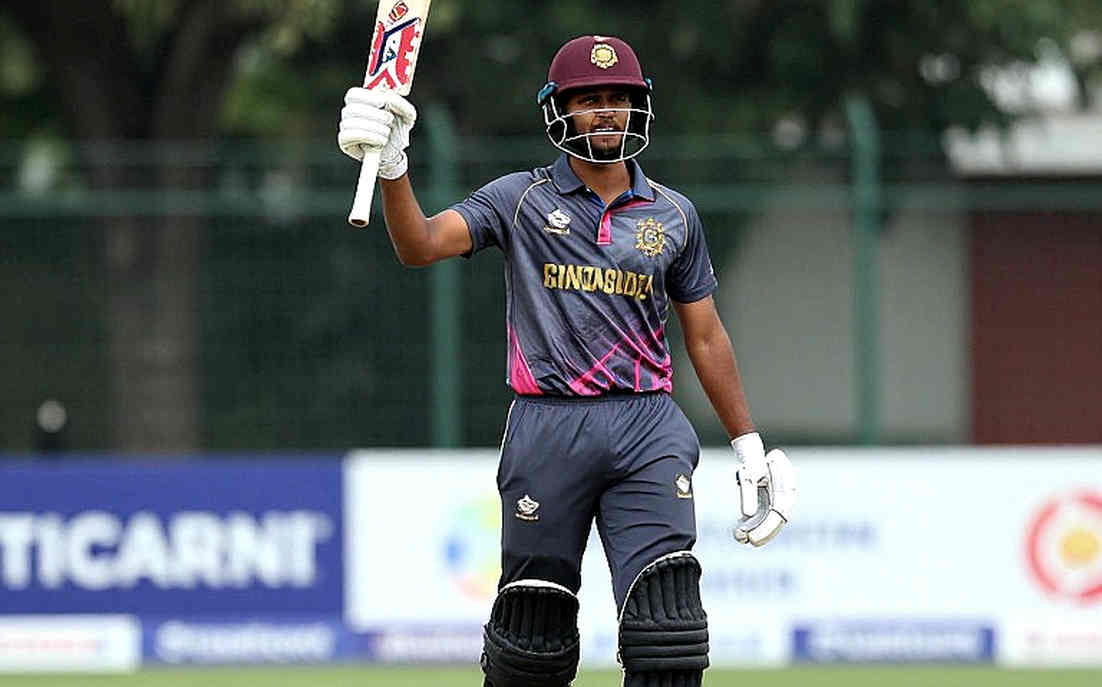
This caution matters, because in the social media age an inference quickly becomes a fact. A wrong date, a wrong squad — these spread. I do not want my analysis to be part of that spread. So I make it clear: the fixture dates, the squad names — these need verification. BCB, the Asian Cricket Council, and reliable cricket databases — only after checking with them should these be used externally.
The risk picture: a medium-risk series
Now I turn to risk. When analysing a series I always build a risk matrix. In this series I would call the risk level medium. And that medium level comes almost entirely from logistics and scheduling volatility — not from on-field play, not from commercial factors.
The first risk is sporting. A split squad means insufficient joint preparation before the first match. This is a medium-level risk, with medium likelihood and medium impact. There are ways to mitigate it — the ten who arrived early can acclimatise. But the risk remains.
The second risk is also sporting, but separate. Young players adjusting to unfamiliar neutral conditions. October in Oman is hot and humid. This is a medium-level risk. The solution is warm-up time and acclimatisation sessions.
The third risk is personnel-related. There is no injury or fitness data for any player. So this risk cannot be measured. If it cannot be measured, I will not call it low; I will call it 'unassessable'.
The fourth risk, which I consider most important. Four ODIs in seven days — this workload is a strain for young players, especially quicks. This risk is medium-level, with medium likelihood and medium impact. The mitigation is rotation and age-group workload protocols.
The fifth risk is rules and governance-related. Visa or administrative disruption, and further schedule change. This is also a medium-level risk. The mitigation is keeping buffer days and processing visas in advance.
The sixth risk is systemic. Afghanistan's structural dependence on neutral venues. This is a high-likelihood risk, though with medium impact. The reason is clear — this arrangement has run for years, and there is no obvious way to change it.
Beyond these risks I note two things. One, there is no commercial risk in this series, because it is not a commercial event. Two, public-opinion risk is negligible, because it is a low-light series.
But this low-light series has a hidden importance. I said earlier that the word 'again' is a signal of a pattern. If this series is repeatedly disrupted, other teams will think twice about such Oman-based tours in future. Then Afghanistan's neutral-venue arrangement will become even harder. That is why this small series carries a large significance.
Signals: what to watch
Let me lay out for readers a few signals worth watching in the coming weeks.
The first signal is confirmation of the final schedule. Watch for official announcements from the BCB and the Asian Council. If the 17–23 October dates change again, you will know both teams' preparation is being further disrupted.
The second signal is completion of the squad's arrival. If the remaining players do not arrive on Thursday, preparation will be further compressed. This can directly affect the matches.
The third signal is the series results. This will appear on the scorecard later. But watch the type of performance more than the result — who can handle pressure, who can adjust to conditions.
The fourth signal is the future of the neutral-venue arrangement. If Oman or the UAE is again chosen for Afghanistan's home series, you will know this arrangement is becoming permanent.
Closing: where the story actually begins
I began this piece with an empty corridor at the Oman Cricket Academy. No one has gripped a bat there yet. The schedule changed, the visas stalled, the team arrived split. All of this happened off the field. But I know that everything on the field begins off it.
I have learned one thing in my career. Cricket's most important moments are often outside the camera. They are in the tunnel, in the hotel corridor, in the silence of a net session. The player who does his job well there gets his reward on the field.
The real story of this series is therefore not yet written. It will be written on 17 October, when the first ball is bowled. But the week before it will decide who is ready and who is not.
I leave one question. If a series' schedule changes twice, and a team arrives in two waves, who is harmed more? The big team, with a deep system, may absorb the damage. For the smaller team, still rising, the value of every preparation session is great. At Oman's neutral ground, where neither gets home advantage, the answer to this question will be found on the field.
And one thing I can say with certainty. The player who emerges from this series will come from dim light. But cricket history says that great players often come from dim light. I will simply wait to see who lights that lamp.